

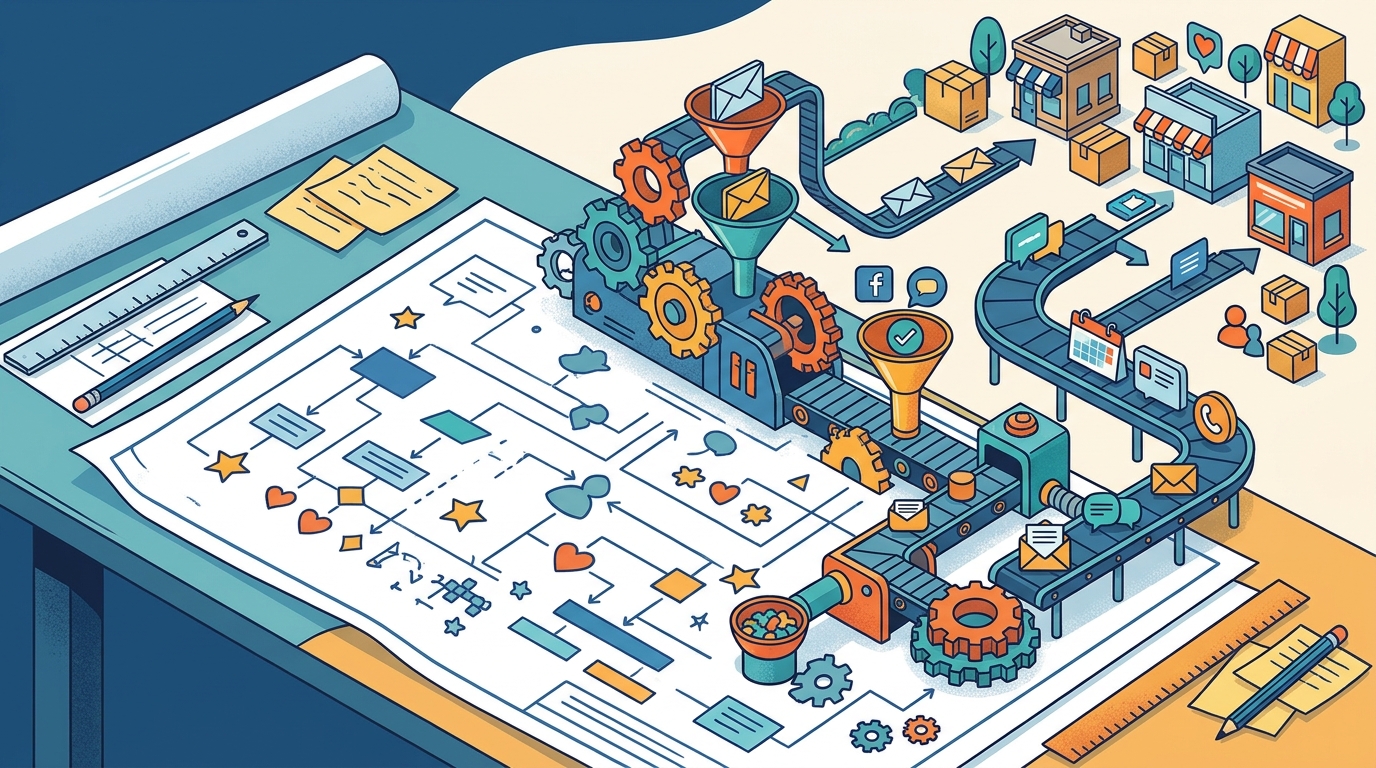
Marketing automation is the use of software to execute repetitive marketing tasks, such as sending emails or updating social media posts, without manual intervention. For small businesses, it is a way to keep leads warm and consistent without hiring a full-time marketing team. Before you hire someone to set it up, you need to understand that the technology is only as good as the strategy behind it. Automation should support a clear customer journey, not just replace manual clicks. If your data is messy or your goals are vague, automation will simply scale your confusion.
Define Your Goals Before Choosing Tools
Many small business owners jump straight to software selection, but this is the wrong starting point. You must first define what success looks like. Are you trying to reduce the time it takes to respond to a new lead? Do you want to nurture prospects who are not ready to buy yet? Or is the goal to re-engage customers who have gone quiet? Each of these goals requires a different type of automation. For example, a law firm might prioritize speed-to-lead, while a retail store might focus on cart abandonment. Without a clear objective, you will end up with a complex system that does not move the needle on revenue.
Audit Your Data and Customer Journey
Marketing automation is a data-driven discipline. If your customer data is fragmented across different platforms, your automation will fail. You need a single source of truth for your contacts. This means ensuring that your website forms, your CRM, and your email platform are all talking to each other. A common mistake is having a beautiful email sequence that sends to the wrong people because the data was not synced correctly. Before hiring a specialist, take an inventory of where your customer data lives. If you are using a spreadsheet and a separate email tool, you need to plan for integration. It is wise to start projects by auditing the existing digital footprint to ensure the foundation is solid before building the automation layer.
Understand the Cost of Implementation and Maintenance
Marketing automation is not a one-time purchase. It is an ongoing investment. You will pay for the software subscription, the setup fees, and the time required to maintain the system. For a small business, this can be a significant monthly expense. You need to understand the total cost of ownership. This includes the cost of the platform, the cost of the agency or freelancer who sets it up, and the internal time required to manage it. Some platforms are cheap but require significant technical skill to use effectively. Others are expensive but offer more hand-holding. You should also consider the cost of inaction. If you are losing leads because you do not follow up quickly enough, the cost of not having automation might be higher than the cost of implementing it.
Choose the Right Partner for Setup
When you hire someone to set up marketing automation, you are not just hiring a technician. You are hiring a strategist. The right partner will ask questions about your business goals, your customer personas, and your sales process. They will not just plug in your data and send a generic email. They will design a journey that reflects how your customers actually behave. Look for a partner who has experience with businesses like yours. A developer who specializes in e-commerce may not be the best fit for a local service business. A good partner will also provide training or documentation so that your team can manage the system after the initial setup.
Plan for Measurement and Iteration
Setting up the automation is only the beginning. You need to know how to measure its performance. What metrics matter? Open rates are a vanity metric. You should focus on metrics that correlate with revenue, such as conversion rates, customer lifetime value, and response times. You need to build a feedback loop into your process. This means regularly reviewing the data and making adjustments. If an email is not performing, you change it. If a lead is not moving through the funnel, you investigate why. Automation is not set-and-forget. It requires continuous optimization. If you hire a partner, ask them how they handle ongoing optimization. Do they offer a retainer for maintenance? Do they provide regular reports? You need a clear plan for how the system will evolve as your business grows.
Key Takeaways
- Marketing automation is the use of software to execute repetitive marketing tasks without manual intervention.
- Define your specific business goals before selecting any software or hiring a specialist.
- Audit your data to ensure a single source of truth for customer information.
- Understand the total cost of ownership, including software, setup, and maintenance.
- Choose a partner who acts as a strategist, not just a technician.
- Focus on revenue-driven metrics rather than vanity metrics like open rates.
- Plan for continuous optimization and iteration after the initial setup.
Frequently Asked Questions
What is the difference between marketing automation and email marketing?
Email marketing is a channel for sending messages to a list of contacts. Marketing automation is a broader system that can include email, but also social media, CRM updates, and other tasks. Automation triggers actions based on user behavior, such as visiting a specific page or filling out a form. Email marketing is often a component of a larger marketing automation strategy.
How much does it cost to set up marketing automation?
Do I need a CRM for marketing automation?
While not strictly required, a CRM is highly recommended. A CRM stores your customer data and tracks interactions. Most marketing automation tools integrate with CRMs to ensure that data is consistent. Without a CRM, you may struggle to keep your data organized and up-to-date, which can lead to poor automation performance.
How long does it take to set up marketing automation?
The timeline depends on the complexity of the project. A simple email sequence might take a few days to set up. A more complex system that integrates multiple platforms and includes custom logic can take several weeks to a few months. It is important to allow time for testing and refinement before launching the full system.
Can I manage marketing automation myself?
Yes, if you have the time and technical skills. Many platforms are designed to be user-friendly. However, setting up a robust system that aligns with your business strategy can be challenging. If you are short on time or lack technical expertise, hiring a specialist can save you time and ensure that the system is set up correctly.
What are the common mistakes small businesses make with marketing automation?
Common mistakes include not defining clear goals, using poor quality data, sending too many messages, and not measuring results. Another mistake is treating automation as a one-time project rather than an ongoing process. It is important to regularly review and optimize your automation to ensure it continues to deliver value.
Start With a Clear Strategy
Marketing automation is a powerful tool for small businesses, but it requires a solid foundation. Before you hire someone to set it up, take the time to define your goals, audit your data, and understand the costs involved. Choose a partner who can help you build a system that aligns with your business strategy. If you are ready to take the next step, consider reaching out to a specialist to discuss your specific needs. Learn more: About Rory Ulloa Houston.