
Choosing the right voice AI for customer service in Houston depends on whether you need simple call deflection or complex, multi-step automation. For most local service businesses, a platform that integrates directly with your existing CRM and website is more valuable than one with the most advanced conversational AI. The Roy Effect focuses on building these integrations into custom websites, ensuring your AI agent acts as a true salesperson rather than just a chatbot. This guide compares the primary approaches to voice AI automation available to Houston businesses in 2026.
Custom Integrated Voice Agents
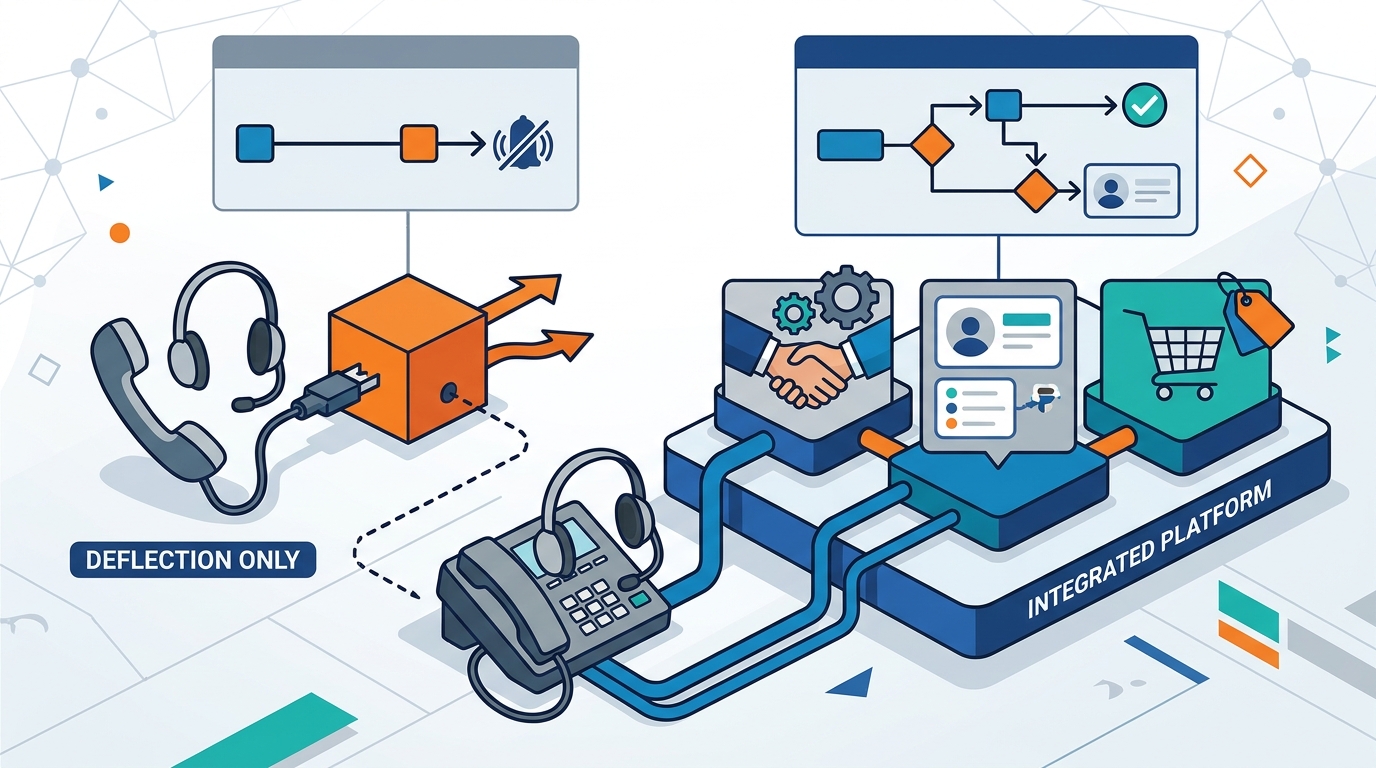
Custom integrated voice agents are AI systems built specifically for a business's unique workflows, often embedded directly into a custom website or CRM. These systems are designed to handle specific tasks, such as booking appointments, qualifying leads, or answering FAQs, using the exact data and logic of the business. The primary strength of this approach is precision. Because the agent is built around your specific service offerings and customer journey, it rarely gives generic or incorrect answers. This is particularly useful for high-value services where a missed lead means lost revenue.
The limitation of custom agents is the initial development time and cost. They require a clear definition of workflows and often a custom build, which takes longer than deploying a pre-made SaaS tool. However, for businesses where the website is a primary lead source, this investment often pays off quickly. The Roy Effect specializes in this model, pairing custom web design with AI agents that answer when you can't. This ensures the AI speaks the same language as your brand and guides users toward the specific actions you want them to take.
SaaS Voice AI Platforms
SaaS voice AI platforms are subscription-based services that provide pre-built voice bots with drag-and-drop interfaces. These platforms allow businesses to create decision trees and upload knowledge bases without writing code. The main advantage is speed. You can have a basic voice agent live in days, not weeks. These platforms often come with built-in telephony, meaning they can handle inbound phone calls directly, which is a significant benefit for businesses that rely heavily on phone inquiries.
The trade-off is flexibility. SaaS platforms operate within their own ecosystems. If your website is built on a different platform, integrating the AI agent can be difficult or require expensive middleware. Additionally, the conversational flow is often rigid. If a customer asks a question outside the pre-defined decision tree, the bot may fail to answer or transfer the call to a human, which defeats the purpose of automation. These platforms suit businesses with simple, repetitive inquiries and a strong need for immediate phone coverage.
Hybrid Automation Systems
Hybrid automation systems combine voice AI with broader business process automation, such as email follow-ups, CRM updates, and task management. In this model, the voice agent is just one node in a larger workflow. For example, when a voice agent books a job, the system automatically updates the calendar, sends a confirmation email, and creates a task for the technician. This approach is powerful for operational efficiency, not just customer service.
The complexity of hybrid systems is their main drawback. Setting up the connections between the AI, your CRM, and your email requires technical expertise. If one link in the chain breaks, the entire automation can fail. This model suits established businesses with mature operations that want to reduce administrative overhead. It is less suitable for startups or small teams that need a simple, standalone solution first.
Comparison of Voice AI Approaches
| Criteria | Custom Integrated Agents | SaaS Voice Platforms | Hybrid Automation |
|---|---|---|---|
| Setup Time | Weeks | Days | Weeks to Months |
| Flexibility | High | Low to Medium | High |
| Phone Integration | Requires Middleware | Native | Native or Middleware |
| Brand Consistency | Excellent | Generic | Good |
| Best For | High-Value Leads | High-Volume Simple Calls | Operational Efficiency |
Choosing the Right Platform for Your Business
Choose custom integrated agents if your website is your primary source of leads and you need the AI to guide customers through a complex decision process. This is ideal for professional services, healthcare, or high-ticket sales where the context of the inquiry matters. The Roy Effect builds these systems to ensure the AI aligns perfectly with your brand and conversion goals.
Choose SaaS voice platforms if your main pain point is missed phone calls and your inquiries are simple and repetitive. If you need a solution live this week and do not require deep integration with a custom website, a SaaS tool is the fastest path. Look for platforms that offer transparent pricing and easy cancellation.
Choose hybrid automation if you are already using a CRM and want to reduce the manual work of data entry and follow-up. This is best for established operations where the goal is to streamline the entire customer lifecycle, from first contact to job completion.
Frequently Asked Questions
Can I switch from a SaaS voice AI to a custom agent later?
Yes, but you will need to rebuild the logic. The data you collect in a SaaS platform can be exported, but the decision trees and integrations will not transfer directly. Plan for a transition period where both systems might run in parallel to ensure no leads are lost during the switch.
Do voice AI agents work with existing phone systems?
It depends on the platform. SaaS platforms usually have native telephony. Custom agents often require middleware to connect to your existing PBX or VoIP system. Ensure the platform you choose supports your current phone infrastructure before signing a contract.
How much does voice AI automation cost in Houston?
Costs vary widely. SaaS platforms typically charge a monthly subscription based on call volume. Custom builds involve a one-time development fee plus ongoing hosting and maintenance. For custom solutions, prices often start in the mid-four figures, depending on the complexity of the workflows and integrations required.
Will a voice AI agent sound robotic to my customers?
Modern voice AI has improved significantly, but it is not indistinguishable from a human. Transparency is key. Informing customers that they are speaking with an AI assistant often improves satisfaction, as it sets expectations. The tone and language of the agent should match your brand's voice to maintain trust.
What happens if the AI agent doesn't understand a customer?
Next Steps for Houston Businesses
Selecting the right voice AI platform is a strategic decision that impacts both customer experience and operational efficiency. Start by auditing your current call volume and the types of inquiries you receive. If you are ready to build a system that truly represents your brand and drives conversions, The Roy Effect can help you design and implement a custom AI solution. Book a discovery call to discuss how voice AI can fit into your existing workflow.