
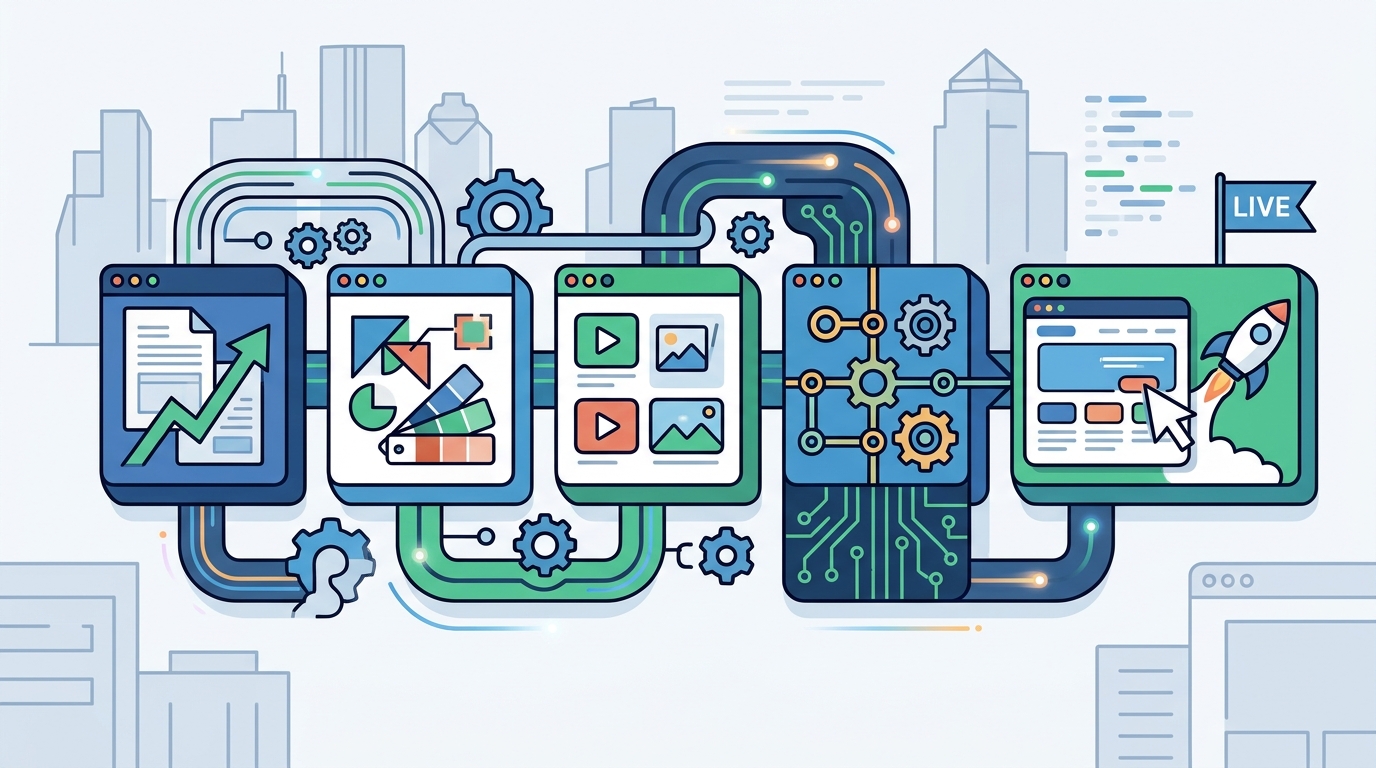
Launching an AI-powered no-code website typically takes between two and six weeks. This timeline depends heavily on content readiness, design complexity, and integration requirements. The Roy Effect, a Houston-based creative studio, structures these projects to move efficiently from strategy to live deployment. Understanding the specific phases helps you plan your launch date accurately.
The Discovery and Strategy Phase
The first step is defining what the website must achieve. This phase usually takes three to five days. You need to identify your target audience, map out the user journey, and define the core value proposition. Without a clear strategy, the build phase stalls because developers do not know what to prioritize. The Roy Effect begins every project with a brief and scope agreement to lock in these details early.
Defining the Scope
Scope creep is the primary cause of delayed launches. You must decide which pages are essential for launch and which can wait. A typical small business site includes a homepage, about page, services page, and contact page. Adding complex features like e-commerce or member portals extends the timeline significantly. Clear boundaries here prevent weeks of rework later.
Design and Prototyping
Design is where the visual identity takes shape. This stage generally requires one to two weeks. You will review wireframes and high-fidelity mockups. The goal is to approve the look and feel before any code is written. In a no-code environment, design and build are often simultaneous, but approval gates remain critical. The Roy Effect uses a direction phase to lock in typography, color, and layout language before production begins.
Iterative Feedback
Feedback loops can extend this phase if communication is slow. Aim to provide consolidated feedback within 48 hours of receiving mockups. This keeps the momentum going. If you are unsure about a design choice, ask for alternatives rather than guessing. This ensures the final product matches your brand vision without unnecessary delays.
Content Creation and Curation
Content is often the biggest bottleneck in web projects. Writing copy, sourcing images, and organizing information can take one to three weeks. This work often runs in parallel with design, but it must be finished before launch. If you do not have professional copy, you need to budget time for writing or hiring a writer. The Roy Effect emphasizes that copy is the single biggest quality lever on a small-business site. Poor content undermines even the best design.
Asset Preparation
Images must be optimized for web performance. Large files slow down load times and hurt search rankings. You need high-resolution photos that are compressed for the browser. Stock photos are acceptable, but original photography builds trust. Ensure all assets are ready before the build phase begins to avoid last-minute scrambling.
The No-Code Build Process
The actual construction of the site takes one to two weeks for a standard project. No-code platforms like Webflow or Framer allow for rapid assembly. You connect the design to the platform, set up the CMS, and configure forms. This phase requires technical precision. Even with AI assistance, you need to verify that every element works on mobile and desktop. The Roy Effect builds on modern no-code stacks to ensure speed and flexibility.
Integration and Functionality
If your site requires integrations like payment gateways, CRMs, or booking systems, add extra time. Each integration requires testing to ensure data flows correctly. A simple contact form is quick, but a complex lead qualification flow takes longer. Test every button and form during this phase. Broken functionality at launch damages credibility immediately.
Testing, SEO, and Launch
The final phase covers quality assurance and search engine optimization. This takes three to five days. You must test the site on multiple devices and browsers. Check link integrity, form submissions, and page load speeds. SEO basics include setting unique titles, meta descriptions, and alt text for images. The Roy Effect includes performance and SEO basics in the build process. Once everything passes testing, you connect the domain and go live.
Post-Launch Support
Launch is not the end. You need a period of monitoring to catch any issues that appear in the wild. The Roy Effect includes post-launch support for the first two weeks. This ensures that any bugs or content errors are fixed quickly. It also allows for minor adjustments based on real user behavior.
Key Takeaways
- A standard AI-powered no-code website takes two to six weeks to launch.
- Content creation is often the longest and most critical phase.
- Clear scope definition prevents delays caused by feature creep.
- Design approval gates ensure the build matches your brand vision.
- Technical testing on mobile and desktop is non-negotiable.
- Post-launch support helps catch issues that only appear in production.
Frequently Asked Questions
How does AI speed up the no-code build process?
AI tools can generate copy, suggest layouts, and automate repetitive coding tasks. This reduces the time spent on manual setup and allows you to focus on strategy and content. However, human oversight is still required to ensure quality and brand consistency.
Can I launch a website in less than two weeks?
It is possible for very simple sites with pre-written content and minimal features. However, rushing the process often leads to poor user experience and technical errors. A two-week minimum is a safer baseline for a professional result.
What is the most common reason for project delays?
Content readiness is the most frequent cause of delays. If copy and images are not finalized before the build phase begins, the project stalls. Start content work early to keep the timeline on track.
Do I need to know how to code for a no-code site?
No, that is the point of no-code platforms. You need to understand the structure of the site and the content, but not the underlying code. However, basic technical literacy helps with troubleshooting and customization.
How long does the design phase usually take?
Design typically takes one to two weeks. This includes wireframing, high-fidelity mockups, and revision rounds. The duration depends on how quickly you provide feedback and how complex the visual identity is.
Is it worth hiring a freelancer for a no-code site?
Yes, if you value your time and need a professional result. A freelancer brings expertise in design, UX, and technical setup. They can navigate the platform more efficiently than a beginner, saving you hours of trial and error.
What happens after the website goes live?
You enter a post-launch support period. This involves monitoring the site for bugs, updating content, and making minor adjustments. Ongoing maintenance is also necessary to keep the site secure and up to date.
Start Your Project
Ready to launch your website? The Roy Effect offers a free 5-minute video audit to identify bottlenecks in your current site. Get your free audit to see where you stand and how to move forward.