

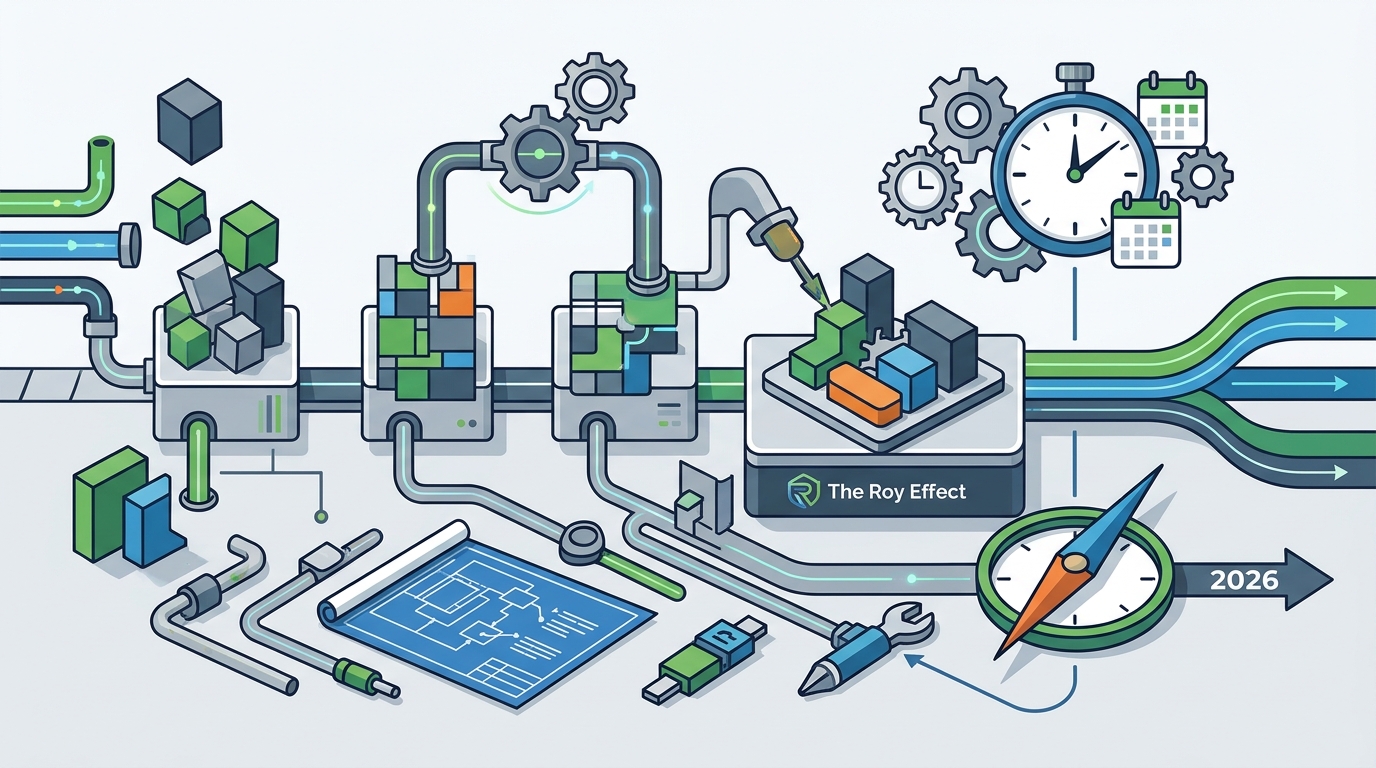
Setting up a fully integrated business system typically takes 4 to 8 weeks. The timeline depends on the complexity of your current tools and the depth of the integrations required. The Roy Effect, a Houston-based creative studio, structures this process into distinct phases to ensure stability before launch. This article outlines the specific steps, durations, and deliverables involved in connecting your digital assets into a single, cohesive workflow. For additional details, review the About Rory Ulloa Houston.
Phase One: Audit and Strategy (Weeks 1-2)
The first step is a comprehensive audit of your existing digital footprint. A digital audit is the systematic evaluation of your current websites, software, and data flows to identify gaps and friction points. During this phase, The Roy Effect analyzes how your website, inbox, calendar, and CRM currently interact. We map out where leads are lost and where manual data entry creates bottlenecks. This diagnostic period usually takes one to two weeks. The goal is to create a clear blueprint that defines the scope of the integration. Without this foundation, any subsequent build risks misalignment with your actual business needs.
Phase Two: Design and Architecture (Weeks 3-4)
Once the strategy is locked, the design phase begins. System architecture is the structural plan that dictates how data moves between your various platforms. We design the user interface for your website and the logic for your automation workflows. This includes mapping out how a form submission on your site triggers a calendar invite and a CRM entry. The Roy Effect uses no-code and AI-assisted tools to prototype these connections. This phase typically spans two weeks. It is critical to review these designs before development starts. Approving the architecture early prevents costly rework later in the process.
Phase Three: Development and Integration (Weeks 5-7)
Development is where the system comes to life. We build the custom website pages and configure the automation rules. This phase involves connecting your CRM to your email provider and your payment processor. The Roy Effect focuses on seamless data synchronization to ensure no lead information is lost. This stage usually takes three weeks, depending on the number of integrations. We test each connection rigorously to handle edge cases, such as duplicate entries or failed API calls. The emphasis here is on reliability and speed. A slow or broken integration undermines the value of the entire system.
Phase Four: Testing and Launch (Week 8)
The final phase is dedicated to quality assurance and deployment. We run end-to-end tests to simulate real customer journeys. This ensures that every button, form, and automated response works as intended. The Roy Effect provides a short walkthrough to train your team on the new system. Launch typically occurs in the eighth week. Post-launch support is included for the first two weeks to address any minor issues. This final buffer ensures a smooth transition from your old, fragmented tools to the new integrated system.
Key Takeaways
- A fully integrated business system typically takes 4 to 8 weeks to build.
- The audit phase is essential for identifying gaps in your current workflow.
- System architecture must be approved before development begins to avoid rework.
- Development focuses on seamless data synchronization between CRM, email, and website.
- The Roy Effect uses a structured, phased approach to minimize risk and timeline slippage.
Frequently Asked Questions
How long does it take to integrate a CRM with a website?
Integrating a CRM with a website typically takes 1 to 2 weeks as part of a larger system build. The duration depends on the complexity of the data mapping and the specific CRM platform used.
What is the most common bottleneck in system integration?
The most common bottleneck is unclear data mapping. If it is not defined exactly how a lead moves from a form to a CRM record, development stalls. Clear architecture in the design phase prevents this.
Do I need to hire a full-time developer for this?
No, you do not need a full-time developer. The Roy Effect handles the build and integration as a project or retainer. This allows you to access specialized expertise without the overhead of a permanent hire.
Can I keep my existing website during the integration?
Yes, you can keep your existing website. We can integrate your current site with new automation tools. However, a custom build often yields better performance and conversion rates in the long run.
What happens if an integration fails after launch?
Is AI used in the integration process?
Yes, AI-assisted tools are used to streamline development and testing. These tools help identify potential errors in the code and automate repetitive configuration tasks, speeding up the timeline.
Start Your Integration with The Roy Effect
Building a fully integrated business system is a strategic investment that pays off through efficiency and lead capture. The Roy Effect provides the expertise to navigate this process from audit to launch. If you are ready to streamline your operations, book a discovery call to discuss your specific needs and timeline.