
For most businesses, a custom design and build is the only way to guarantee true brand consistency across every page. While DIY builders offer speed, they often force you into rigid templates that dilute your identity. The Roy Effect recommends custom no-code platforms for teams that need a coherent look from day one. This approach ensures that every element, from typography to spacing, aligns with your brand strategy without the friction of fighting a generic editor.
Custom No-Code Platforms
Custom no-code platforms like Webflow and Framer allow for pixel-perfect control over design systems. These tools let you define global styles for colors, fonts, and spacing once, then apply them across the entire site. This is the strongest method for maintaining consistency because it removes the need to manually adjust every individual page. The Roy Effect frequently uses these platforms to build sites where the design language is locked in from the start. You get the speed of a builder with the precision of a custom development environment. This is ideal for brands that view their website as a primary sales tool rather than a simple brochure.
Strengths
- Global style tokens ensure uniformity across all pages.
- Full control over responsive behavior on mobile and desktop.
- Ability to create complex interactions that match brand tone.
Limits
- Requires a higher initial investment in design and build time.
- Learning curve can be steep for non-technical owners.
DIY Website Builders
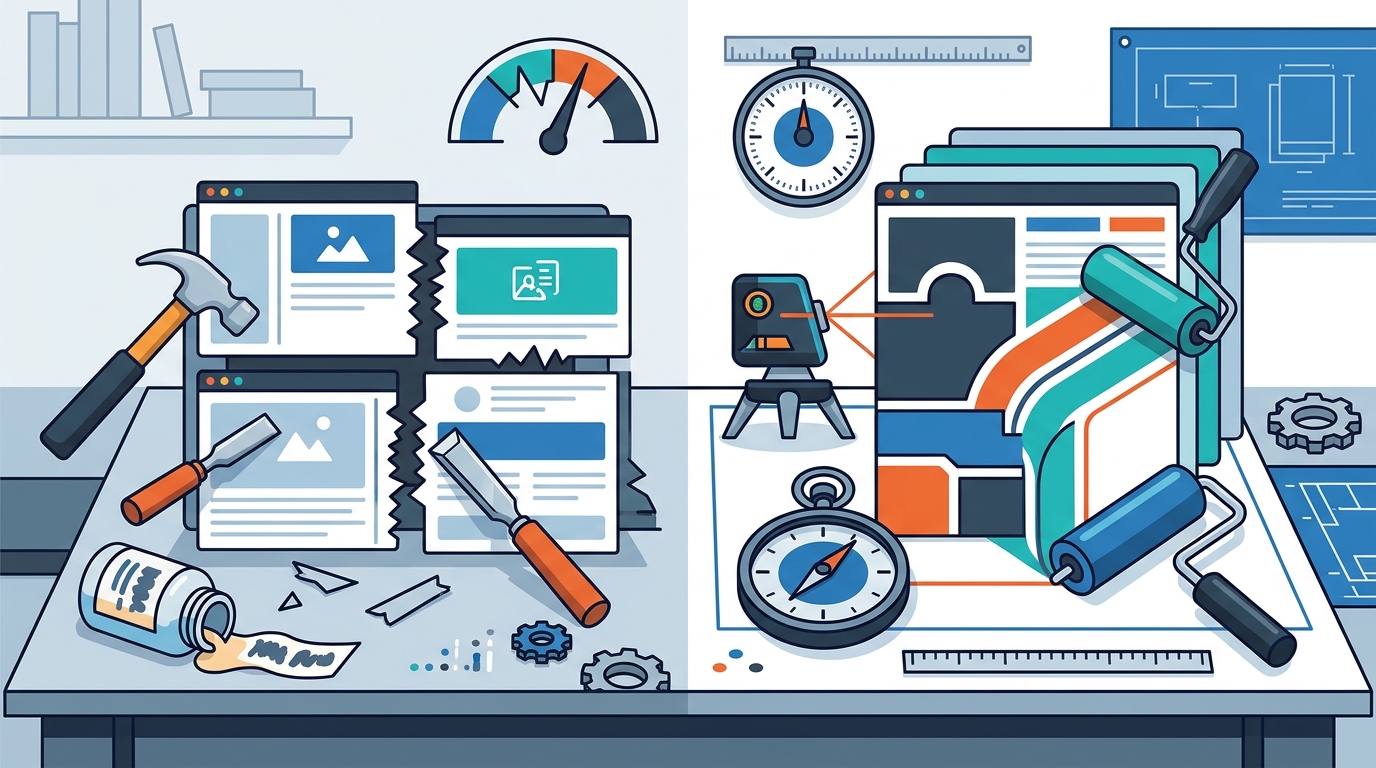
Strengths
- Lowest barrier to entry and fastest time to launch.
- Minimal technical knowledge required for basic updates.
Limits
- Design is constrained by the chosen template.
- Difficult to maintain unique brand elements across many pages.
- Often leads to a generic look that blends in with competitors.
Comparison of Website Builders
| Criteria | Custom No-Code (Webflow/Framer) | DIY Builders (Squarespace/Wix) |
|---|---|---|
| Brand Control | High (Global styles and custom CSS) | Low (Template-dependent) |
| Consistency Across Pages | Automatic via design systems | Manual and often inconsistent |
| Initial Cost | Higher (Design and build fees) | Lower (Subscription only) |
| Time to Launch | Weeks to Months | Days to Weeks |
| Best For | Businesses where the site is a lead source | Pre-revenue ideas or simple brochures |
Choosing the Right Builder for Your Brand
The decision comes down to how much your brand identity matters to your bottom line. If your website is a primary source of leads, you need a tool that enforces consistency. If you are just validating an idea, a builder is sufficient. Here is how to decide based on your specific situation. according to A Literature Review
Choose Custom No-Code If
- Your website is a primary lead source and a competitor's site is one tab away.
- You rely on local search and need custom structure for SEO.
- Your time is billable, and you cannot afford to spend 40 hours fighting an editor.
- You need the site to take deposits, book calls, or qualify leads.
Choose DIY Builders If
- You are pre-revenue or validating a new idea.
- You enjoy tinkering and can commit 20 to 40 hours to learning the editor.
- The site is a digital business card with no competitive pressure.
Frequently Asked Questions
Can I switch from a DIY builder to a custom site later?
Yes, but you will need to rebuild the site from scratch. Content can be migrated, but the design and structure must be recreated in the new platform. This is a common path for businesses that outgrow their initial template.
How much does it cost to maintain brand consistency?
With a custom build, consistency is built into the design system, so ongoing maintenance is minimal. With DIY builders, you may spend hours manually adjusting pages to ensure they match, which is a hidden cost of time.
Do I need a developer to use a no-code platform?
Not necessarily, but having a designer or developer set up the initial design system is highly recommended. Once the system is in place, you can manage content yourself without breaking the visual consistency.
What is the biggest risk of using a template?
The biggest risk is looking generic. If your competitors use the same template, your brand loses its unique identity. This can make it harder to justify premium pricing or stand out in local search results.
How long does a custom build take?
A typical custom design and build takes several weeks to a few months, depending on the scope. This is longer than a DIY build, but the result is a site that is tailored to your specific business needs and brand identity.
Start With a Free Audit
If you are unsure whether your current site is hurting your brand consistency, the first step is to get an objective look. The Roy Effect offers a free 5-minute video audit of your website. This teardown identifies where your UX bottlenecks and conversion leaks are, giving you the evidence you need to decide if a rebuild is worth the investment. To plan your visit, request your free audit and see what your site could become.