

For most no-code websites, Stripe and PayPal are the best payment platforms because they offer native integrations with major builders like Webflow and Framer. Shopify suits product-heavy stores, while Square works best for businesses needing offline point-of-sale capabilities. The right choice depends on whether you are selling digital services, physical goods, or booking appointments.
Stripe: The Developer-First Standard
Stripe is a payment processing platform that allows businesses to accept online payments through a unified API. It is the default choice for many no-code developers because of its extensive documentation and native plugins. For a site built on Webflow or Framer, Stripe provides a clean way to handle subscriptions, one-time payments, and complex billing logic without writing custom code.
The primary strength of Stripe is its flexibility. You can create payment links, use checkout sessions, or embed a full checkout form. This makes it ideal for service-based businesses that need to invoice clients or sell digital products. However, the setup can be slightly more technical than a simple button. You need to understand the difference between a Payment Intent and a Checkout Session. If you are comfortable with a bit of configuration, Stripe offers the most professional experience for your customers.
Stripe suits founders who are building a service business, a SaaS product, or a digital membership site. It is less ideal for simple physical goods stores unless you are using a commerce-focused no-code builder that has a deep Stripe integration.
PayPal: The Trust Anchor
PayPal is a digital wallet and payment gateway that allows users to pay using their email address or linked bank accounts. It remains the most recognized payment brand globally. For no-code websites, PayPal offers a simple "Pay with PayPal" button that can be embedded via HTML or native integrations. This simplicity is its greatest asset. You do not need to configure webhooks or manage API keys to get started.
The limitation of PayPal is its user experience. Many customers still expect to be redirected to the PayPal site to log in and approve the payment. This can cause friction and lower conversion rates compared to a native checkout. Additionally, PayPal fees are generally higher than Stripe for standard transactions. PayPal is best for businesses that prioritize trust and simplicity over conversion optimization. It works well for local service providers, consultants, and small e-commerce stores where the customer base is broad and not tech-savvy.
Shopify: The Commerce Powerhouse
Shopify is a hosted e-commerce platform that provides a complete store, inventory management, and payment processing in one package. While it is a full platform rather than just a payment gateway, it is often the best "payment platform" for no-code websites that are primarily selling physical products. You can use Shopify as a headless backend, connecting its payment and inventory systems to a custom front-end built in Framer or Webflow.
This approach allows you to have a highly custom-designed website while leveraging Shopify's robust payment infrastructure. The strength here is the ecosystem. You get access to thousands of apps for shipping, taxes, and fulfillment. The limit is cost. Shopify subscriptions and app fees can add up quickly. It is overkill for a simple service site but essential for a growing product brand. Choose Shopify if your website is a store first and a brochure second.
Square: The Offline-Online Bridge
Square is a payment processing system that connects online payments with in-person point-of-sale (POS) hardware. For no-code websites, Square is the best choice if your business operates both online and offline. It allows you to accept payments on your website and in your physical location using the same dashboard. This unified view of sales is a significant advantage for brick-and-mortar businesses.
The integration with no-code builders is generally straightforward, often via a simple button or a native plugin. Square's fees are competitive, and its hardware is user-friendly. However, its online checkout experience is less customizable than Stripe's. It suits local businesses, restaurants, and retail stores that need a seamless transition between their physical and digital presence.
| Platform | Best For | Integration Complexity | Transaction Fees | Key Strength |
|---|---|---|---|---|
| Stripe | Services, SaaS, Digital Goods | Medium (API/Plugin) | 2.9% + 30¢ (Standard) | Flexibility and Developer Tools |
| PayPal | Local Services, Simple Stores | Low (Button/Link) | 3.49% + 49¢ (Standard) | Brand Trust and Simplicity |
| Shopify | Physical Product Stores | High (Headless Setup) | 2.9% + 30¢ (Online) | Complete Commerce Ecosystem |
| Square | Brick-and-Mortar + Online | Low (Button/Plugin) | 2.9% + 30¢ (Online) | Unified POS and Online Sales |
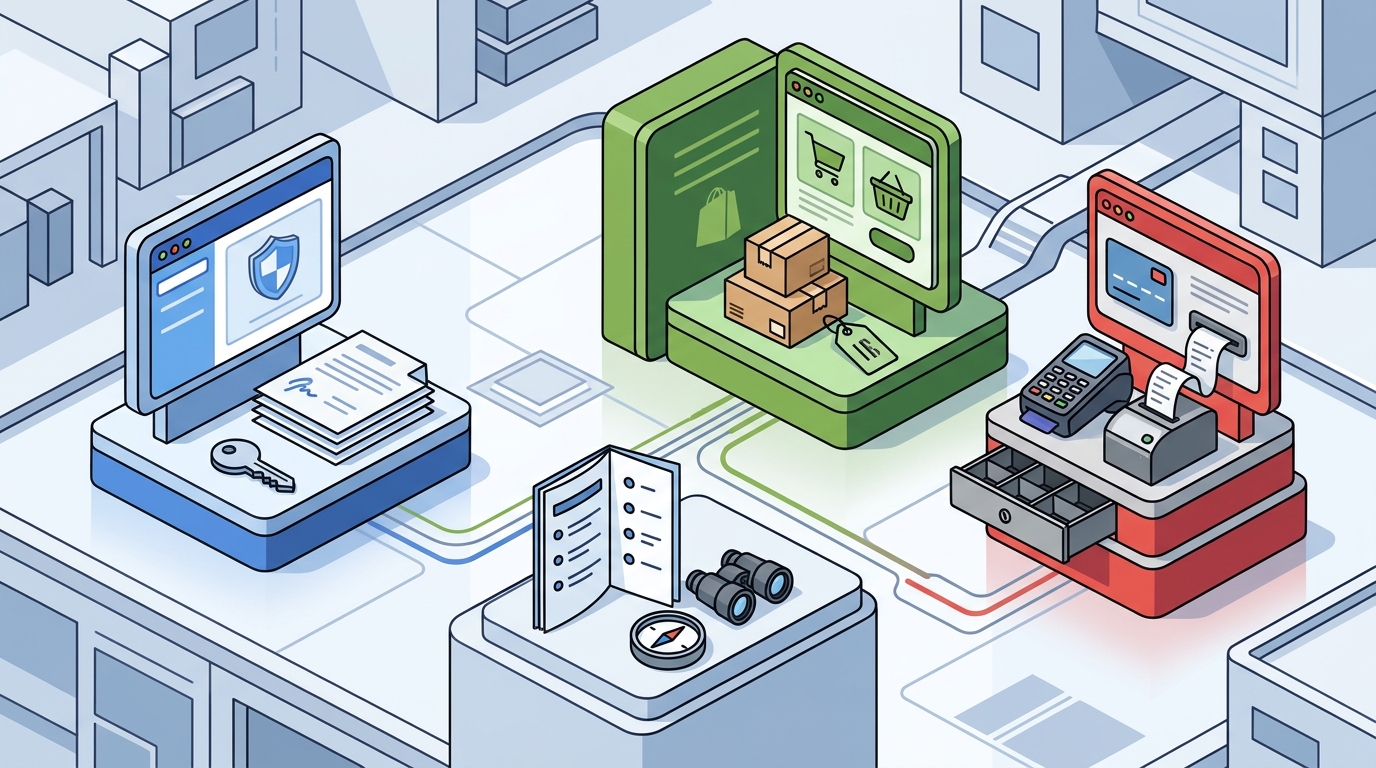
Choosing the Right Platform for Your No-Code Site
Selecting the right payment processor is a strategic decision that impacts your conversion rate and operational efficiency. The following guidance helps you match the platform to your specific business model.
Choose Stripe if...
Choose PayPal if...
You are a local service provider or consultant. Your customers are not tech-savvy and prefer a familiar brand. You want the absolute simplest setup with minimal configuration. You are selling a low volume of high-ticket items where trust is the primary barrier to purchase.
Choose Shopify if...
You are selling physical products with inventory. You need robust shipping, tax, and fulfillment management. You are willing to invest in a headless setup to combine a custom design with a powerful commerce backend. You plan to scale your product line significantly.
Choose Square if...
You have a physical location where you take payments. You want a single dashboard for both online and in-person sales. You need to accept payments on the go using mobile hardware. Your business model relies on a mix of retail and online sales.
Frequently Asked Questions
Can I use multiple payment platforms on a no-code website?
Do I need custom code to integrate Stripe with Webflow or Framer?
No, you do not need to write custom code. Both Webflow and Framer have native integrations or official plugins for Stripe. You can connect your Stripe account directly in the builder's settings and use pre-built components to display the checkout form or payment button.
Which platform has the lowest fees for no-code websites?
Stripe and Square generally have the lowest standard transaction fees at 2.9% plus 30 cents for online payments. PayPal is slightly higher at 3.49% plus 49 cents for standard transactions. However, the "best" fee is the one that matches your customer's preference, as a higher fee may be worth it if it increases your conversion rate.
How do I switch payment platforms if I change my mind?
Switching is usually straightforward. You can add the new platform's button or integration alongside the old one, test it, and then remove the old one. You do not need to rebuild your website. Just ensure you update your accounting records and notify your customers if the payment experience changes significantly.
Is it safe to use a no-code builder for payment processing?
Yes, as long as you use a reputable payment processor like Stripe, PayPal, or Square. The no-code builder handles the front-end display, while the payment processor handles the secure transaction. Your customer's credit card information never touches your website's server, which keeps your site compliant with PCI-DSS standards.
Final Thoughts on Payment Integration
Choosing the right payment platform is a critical step in building a high-converting no-code website. At The Roy Effect, we help businesses in Houston and across the US select and implement the best payment solutions for their specific needs. Whether you are building a service site on Webflow or a product store on Framer, we ensure your payment flow is seamless, secure, and optimized for conversion. If you are ready to build a website that actually brings in business, book a discovery call to discuss your project scope and payment strategy.